How to Get Rid of Small Flying Insects in Your Home


Author:
Mosh Latifi
Co-Owner of Ecocare
Published:
August 3, 2026
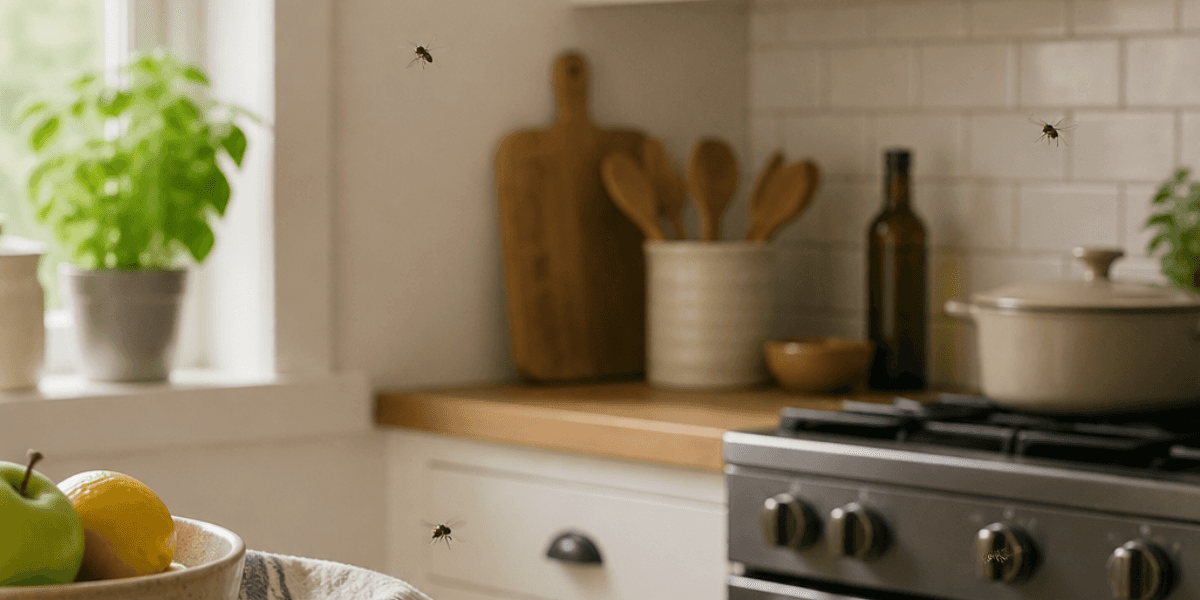
Small flying insects in the home are one of the most common pest complaints we receive, and one of the most misunderstood. People see tiny flies hovering around the kitchen, bathroom, or houseplants and assume it is a minor seasonal annoyance that will sort itself out. In most cases it does not, because the insects are there for a reason, and until that reason is addressed, they will keep coming back regardless of how many times you reach for the spray.
Understanding what you are dealing with is the first step to dealing with it effectively.
Table of Content
Identifying the Culprit
Not all small flying insects are the same, and the approach you take depends entirely on the species involved. The most common types found in UK homes are fruit flies, drain flies, fungus gnats, and phorid flies. Each has different habits, different breeding sites, and requires a different approach to eliminate.

Fruit Flies
Fruit flies are perhaps the most recognisable. They are tiny, typically around 3 to 4mm in length, with a tan or yellowish-brown body and distinctive red eyes. They are most commonly found hovering around fruit bowls, fermented liquids, recycling bins, and anything sweet or alcohol-based. They breed rapidly in overripe or rotting fruit and in the residue that builds up around bin lids, bottle tops, and the seals of drinks containers.
A single female fruit fly can lay up to 500 eggs in her lifetime, and the life cycle from egg to adult can be completed in as little as a week in warm conditions. This is why a small fruit fly problem can appear to explode in size very quickly during the summer months.
Drain Flies
Drain flies, also known as moth flies due to their small, fuzzy appearance, are commonly found in bathrooms and kitchens. They breed in the organic matter that accumulates inside drains, particularly in the U-bend and the film of material that coats the interior of drain pipes over time. If you are seeing small flies clustering around plug holes, on bathroom walls near drains, or on the surfaces around your kitchen sink, drain flies are the most likely cause.
They do not bite, but they are a sign that drains are not as clean as they should be, and in commercial food environments, their presence is taken seriously by environmental health inspectors.

Fungus Gnats
Fungus gnats are most commonly associated with houseplants, particularly those kept in moist compost. They are slender, dark-bodied, and resemble tiny mosquitoes. The adults themselves cause little direct harm, but their larvae live in the soil of potted plants where they feed on organic matter and, in larger numbers, on plant roots. If your houseplants are looking unhealthy and you are seeing small flies emerging from the compost, fungus gnats are almost certainly the cause.
Overwatering is the primary driver of fungus gnat problems. The damp compost provides ideal conditions for eggs to be laid and larvae to develop. Allowing compost to dry out between waterings is one of the most effective ways to break the cycle.
Phorid Flies
Phorid flies are less well known but worth recognising. They are small, hump-backed flies that run rapidly across surfaces rather than flying in the hovering, slow manner of fruit flies. They breed in a wide range of decaying organic material including drain build-up, food waste, and in some cases, in wall cavities or beneath flooring where organic material has accumulated. Their presence can sometimes indicate a more serious underlying issue such as a drainage problem or a hidden source of decaying matter within the structure of the building.

Why Small Flying Insects Keep Coming Back
The most common reason small flying insect problems persist is that the breeding source is never properly identified or eliminated. Spraying adult flies provides temporary relief but does nothing to address the eggs and larvae developing at the source. A few days later, a new generation of adults emerges and the cycle begins again.
In domestic settings, common breeding sources include overripe fruit left on countertops, residue inside recycling bins, the organic film inside drain pipes, damp houseplant compost, and food waste left in bin liners inside the home. Addressing these thoroughly, rather than simply treating the adult insects that are visible, is what breaks the cycle.
In commercial environments, particularly kitchens, food preparation areas, and waste storage zones, the potential breeding sources are more numerous and the consequences of an uncontrolled infestation more serious. Flying insect control in commercial settings requires a structured approach that combines hygiene improvements with monitoring and, where necessary, professional treatment.

How to Get Rid of Small Flying Insects
Start With the Source
Before reaching for any product, identify where the insects are breeding. Check fruit bowls for anything overripe or beginning to ferment. Inspect recycling bins and clean them thoroughly with hot water and detergent. Clean the seals and caps of bottles before placing them in recycling. Pour a small amount of water into drains and observe whether flies emerge, which confirms drain fly activity. Check houseplants and assess whether they are being overwatered.
Eliminating or thoroughly cleaning the breeding site is the single most effective action you can take.

Clean Your Drains
For drain flies specifically, cleaning the inside of drain pipes is essential. Proprietary drain cleaning products can help break down the organic film where larvae develop, but a thorough physical clean using a drain brush is often more effective. Boiling water poured slowly down the drain can also help, though this should be done with caution in older pipework.
Enzymatic drain cleaners, available from hardware stores, are worth considering as a preventative measure in kitchens and bathrooms where drain fly activity is a recurring problem.
Traps and Monitors
For fruit flies, apple cider vinegar traps are a reliable method of capturing adult insects. A small container with apple cider vinegar covered with cling film and a few small holes punctured in the surface attracts and traps adult flies. These reduce adult numbers while you address the underlying breeding source.
Electronic fly killers, which attract and kill flying insects using ultraviolet light, are widely used in commercial kitchens and can also be effective in domestic settings for ongoing monitoring and control. They do not address the breeding source, but they help manage adult populations and provide a visible indication of activity levels.
Fungus Gnat Management
For fungus gnats, the most important step is adjusting your watering habits. Allow the top two to three centimetres of compost to dry out completely before watering again. Sticky yellow traps placed close to affected plants catch adult gnats and help reduce numbers. For severe infestations, a biological control product containing Steinernema feltiae, a nematode that targets fungus gnat larvae in the soil, can be very effective and is available from garden centres.
Repotting plants into fresh, dry compost removes existing larvae and eggs along with the infested growing medium.

When you Should Call Us
Most small flying insect problems in domestic settings can be resolved by identifying and eliminating the breeding source and maintaining good hygiene practices. However, there are situations where professional treatment is the right step.
If you have thoroughly cleaned the obvious potential sources and the problem persists, there may be a breeding site that is not immediately visible, such as a blocked drain within the wall, a leak beneath flooring, or an accumulation of organic matter in an inaccessible area. In these cases a professional assessment can identify the source where a DIY approach cannot.
For businesses, the threshold for professional intervention is lower. Flying insects in a commercial kitchen, food preparation area, hotel, or any premises subject to environmental health inspection require a structured professional response. The British Pest Control Association recommends that commercial flying insect problems are addressed by qualified technicians using approved products and monitoring systems.
EcoCare's flying insect control service covers both domestic and commercial properties across London and the wider UK. Our BPCA-certified technicians carry out a full assessment to identify breeding sources, recommend hygiene improvements, and apply targeted treatment where required. We use eco-friendly, non-toxic methods wherever possible, and all treatments are fully compliant with current UK regulations.
Preventing Small Flying Insects From Returning
Once a problem has been resolved, a few straightforward habits significantly reduce the likelihood of it returning. Store fruit in the fridge during warmer months. Empty kitchen bins daily and clean bin lids and liners regularly. Clean drains monthly as a preventative measure. Avoid overwatering houseplants. Keep recycling rinsed before placing it in the bin.
In commercial environments, a scheduled pest management programme that includes regular monitoring and documented visits provides the ongoing protection and compliance evidence that businesses in the food and hospitality sectors need.
If you are dealing with a persistent small flying insect problem that is not responding to your own efforts, get in touch with our team today or call us on 0208 146 1490. We will identify the source, treat it properly, and advise on the steps needed to make sure it does not come back.