What Causes Silverfish? How to Identify, Prevent and Get Rid of Them

Author:
Mosh Latifi
Co-Owner of Ecocare
Published:
April 28, 2026
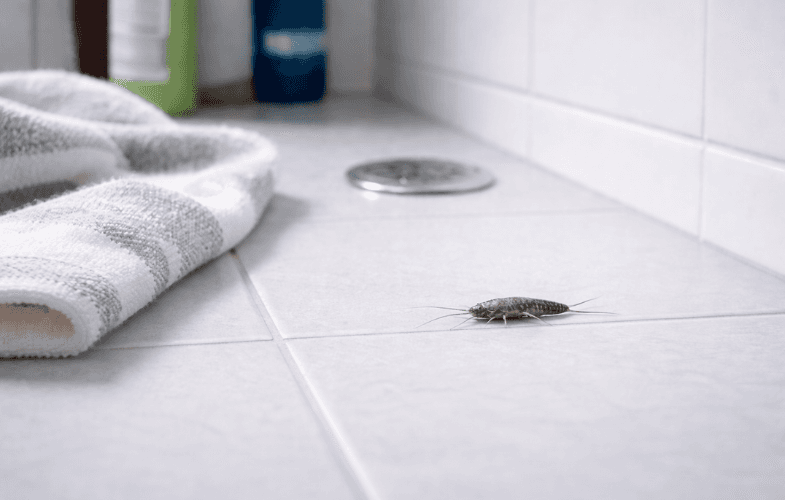
Spotting a silverfish dart across a bathroom floor or vanish behind a kitchen cupboard is an unsettling experience, but it is far more common than most people realise. These fast-moving, teardrop-shaped insects are found in homes and businesses throughout the UK, and while they pose no direct health risk to people, they can cause real damage to books, wallpaper, clothing, and stored food if left unchecked.
Understanding what draws them in is the most effective starting point for getting rid of them. Like most pests, silverfish do not appear randomly. They are attracted to specific conditions, and once you know what those are, both prevention and treatment become far more straightforward.
Table of Content
Getting to Know the Insect
Silverfish, known scientifically as Lepisma saccharina, are one of the oldest insect species on the planet, with fossil records suggesting they have existed for over 400 million years. They belong to the order Zygentoma and are wingless, moving with a distinctive side-to-side motion that resembles a swimming fish and gives them their common name.
Adults are typically 12 to 19mm in length with a silvery, metallic appearance thanks to the tiny scales covering their body. They have two long antennae at the front and three tail-like appendages at the rear. They are nocturnal, most active after dark, spending their days hiding in cracks, crevices, and undisturbed parts of the property.
Compared to most insects, they live a remarkably long time: up to eight years in the right conditions. They reproduce slowly relative to species like cockroaches, but a sustained infestation is entirely possible if the environment that attracted them is not addressed.

What Causes Silverfish to Move In?
The most important thing to understand is that their presence is not a sign of a dirty home. It is almost always linked to environmental conditions rather than hygiene failures. That said, certain habits and building characteristics do make a property significantly more inviting.
High Humidity and Moisture
Humidity is the single most important factor. Silverfish thrive where the relative humidity sits above 75% and will actively seek out those conditions within a building. Bathrooms, kitchens, laundry rooms, basements, and loft spaces affected by condensation or poor ventilation are all prime habitats. Leaking pipes, rising damp, and inadequate extractor fans all contribute to the kind of damp environment they find irresistible.
Warmth
While they can survive in cooler conditions, they strongly prefer warm environments, ideally between 21 and 27 degrees Celsius. Modern central heating has made homes considerably more hospitable to them than older, draughtier properties. Areas around boilers, airing cupboards, under-floor heating systems, and any room that retains warmth overnight are particularly attractive to them.
The Right Kind of Food
Silverfish are omnivores with an appetite for carbohydrates and proteins, but their preferred food sources might surprise you. They readily consume starchy materials: wallpaper paste, book bindings, the glue in cardboard boxes, the starch in cotton and linen fabric, cereal products, dried goods, and even dead skin cells. In properties with large book collections, stacked cardboard in storage, or older wallpaper, they can find an almost unlimited food supply without ever venturing far.
Dark, Undisturbed Spaces
They avoid light and prefer areas that rarely see human activity. Cluttered storage rooms, forgotten corners of loft spaces, the backs of deep kitchen cupboards, spaces behind large appliances, and voids beneath skirting boards or floorboards all offer the kind of shelter they seek. In commercial settings, storerooms and archive areas where boxes sit untouched for long periods are particularly vulnerable.

How They Get In
Silverfish can enter through very small gaps. Cracks in foundations, spaces around pipework and cables, poorly fitted skirting boards, and gaps under external doors are all potential routes in. They can also arrive accidentally, introduced through second-hand furniture, boxes of books, or deliveries that have been stored in damp conditions elsewhere.
Spotting the Signs of an Infestation
Because they are nocturnal and fast-moving, many people only catch a glimpse of them and assume it was a one-off. In reality, a single sighting often indicates a more established population hiding nearby in inaccessible areas.
Look for small, irregular holes or yellow staining on paper, books, wallpaper, and fabric. You may also find tiny, pepper-like droppings near harbourage areas, or the delicate shed scales they leave behind as they moult. Unlike most insects, silverfish moult throughout their entire lives, so shed skins are a reliable indicator of sustained activity rather than a passing visit.
If you are regularly seeing live insects in bathrooms or kitchens in the evening or early morning, there is likely a population already established in the walls, under flooring, or in an undisturbed storage area close by.

Making Your Property Less Welcoming
Because humidity and warmth are the primary drivers, prevention focuses heavily on reducing these conditions throughout the building.
Improving ventilation is one of the most effective steps. Fitting or upgrading extractor fans in bathrooms and kitchens, opening windows regularly, and using a dehumidifier in rooms prone to condensation will all make the property noticeably less hospitable. Fixing leaking pipes and dealing with any rising damp promptly removes one of the key conditions that sustains a population.
Reducing clutter, particularly cardboard stored in loft spaces or basements, limits both food sources and shelter. Keeping books, documents, and dried food in sealed plastic containers rather than open shelving makes them far less accessible. Regularly vacuuming behind large appliances, under skirting boards, and in storage corners disrupts their habitat and removes the debris they feed on.
Sealing gaps around pipework, cables, and skirting boards removes common entry points and reduces the number of sheltered crevices available to them. For older properties with more extensive structural gaps, a proofing assessment from EcoCare can identify and address the most significant vulnerabilities.

Treatment Options
For persistent or widespread infestations, professional treatment is the most reliable and efficient route. EcoCare's BPCA-certified technicians apply targeted residual treatments to harbourage areas, combined with a thorough assessment of the environmental conditions driving the problem. Because populations are often larger than they appear, and because they are sustained by factors that DIY methods cannot fully address, professional intervention provides a more complete and lasting result.
Other Pests That Often Share the Same Conditions
It is worth knowing that silverfish are often found alongside other moisture-loving species. Properties with significant humidity problems may also be harbouring psocids (booklice), firebrats, or, in more severe cases, mould mites. Spotting them can therefore serve as an early warning that the property has broader conditions worth addressing.
Properties dealing with a moth infestation, particularly in areas with stored textiles or archived paper goods, may find that both species are contributing to the same damage. If you are unsure what you are dealing with, EcoCare can carry out an inspection and identify exactly what is present before any treatment is recommended.
Get Expert Help Today
They are persistent once established, but with the right environmental changes and professional support, silverfish can be eliminated and kept out for good. If you are dealing with activity in your home or business, we are ready to help.
Our BPCA-certified technicians serve locations across the UK. We offer a free assessment to all new clients, with 24-hour response available for commercial enquiries. Call us on 0208 146 1490, email info@ecocare-management.com, or book your free assessment online.