How to Identify & Get Rid of Bats

Author:
Mosh Latifi
Co-Owner of Ecocare
Published:
Dec 5, 2025
Finding a bat in your attic or hearing scratching behind the walls is enough to unsettle any household. When a single bat becomes a bat colony, the problem quickly escalates: bat droppings build up, odours spread through the house, and there’s a potential histoplasmosis risk from dried bat guano. Knowing how to get rid of bats safely, legally and humanely is vital, because bats are a protected species and careless roost destruction can lead to prosecution.
EcoCare PestControl Management helps London and Surrey property owners get rid of bats using a thorough inspection and targeted bat control plan. This guide explains how to identify a bat infestation, understand why bats choose your attic or roof space, and what you can do to stop them returning. It sets up the next stage: deterrents, bat exclusion methods and long-term maintenance, supported by BPCA-certified wildlife professionals.
Table of Content

Bat Facts & Information
Size: Most UK bats are small; many fit in a child’s hand, with wingspans of 18–35 cm.
Wings: Thin, flexible wings of skin stretched over elongated fingers, designed for agile flight.
Colour: Typically brown or grey; fur can appear darker in a dark attic or roof void.
Diet: Insectivorous; they feed on moths, beetles, mosquitoes and other flying insects.
Shape: Compact bodies, large ears, narrow wings and a slightly pointed snout.
Behaviour: Nocturnal mammals; leave roosts at dusk and return before dawn, often using the same roost.
Roosts: Prefer quiet, dark, sheltered spots in lofts, eaves, chimneys, barns and cavity walls.
Social structure: Often live in colonies; females form maternity colonies in summer to rear pups.
Health: Can carry disease, and their guano can support fungal spores linked to histoplasmosis.

How to Identify Bats
To get rid of bats effectively, you need to understand why they are on your property and how they use it. Different bat species favour slightly different roosts, but most are drawn to stable temperatures and undisturbed space. Your attic, roof void or outbuilding can mimic a natural cave, especially in urban areas where natural habitat is limited.
The bat life cycle follows a clear pattern. In spring, bats move from winter hibernation sites to summer roosts. By late spring and early summer, females gather into a maternity colony, often choosing lofts or attics above a warm house. Pups are born and remain in the roost while adults feed on insects outside. In late summer and autumn, bats disperse, mate, and then move to winter roosts for hibernation.
Bat infestation usually starts when a few bats discover small entry points in your roof, fascia or gaps around the chimney. Over time, the colony grows, guano builds up, and noise and smell increase. Poor building maintenance, broken tiles and unscreened vents all make it easier for bats to move inside and remain hidden.
Identifying the Infestation: Signs to Look For
A bat infestation is often heard before it’s seen. Homeowners may notice faint squeaking, scratching or rustling, especially at dusk or just before dawn, as bats leave and return to the attic. Outside, you might see them flying out from the same point in the roof each evening.
Inside, look for droppings along beams, window ledges or around roof edges. Bat guano is dry, crumbly and typically found in piles beneath regular flight paths or roost spots. Staining or dark smears near small gaps, vents or roof edges can indicate regular entry points. A strong, musty odour in an otherwise dry area of the house is another common sign of a long-standing colony.

Preventative Strategies: Stop Bats Before They Start
Good prevention makes humane bat control much easier later on. Start by inspecting your attic, loft and roofline from both inside and outside. Check for gaps around eaves, vents, chimneys and fascia boards. Any opening larger than a 10p piece (about 1.5 cm) can act as an entry point for bats. Once you are sure no bats are currently roosting, seal openings with suitable sealant, mesh or flashing.
Reducing food sources also helps. Keep outdoor lighting to a minimum so it doesn’t attract clouds of insects close to the house. Remove standing water where mosquitoes breed and keep the garden tidy to limit insect activity near walls and roofs. Finally, clean any minor guano build-up promptly and maintain regular checks of your attic and roof space. When in doubt, consult a wildlife professional from EcoCare for a thorough survey and tailored bat control plan.

Natural Deterrents: Safe, Non-Chemical Repellents
If you want to get rid of a bat problem gently, start by making the attic and roof space less welcoming. Natural deterrents won’t harm this protected species, but they do nudge the colony to move away from bat-infested areas. Strong scents such as cedar, peppermint and eucalyptus oil placed near entry points can disrupt roosting activity and make roosts feel less secure. White vinegar, wiped on non-porous surfaces, helps remove the musty smell from droppings and guano. Bright lights in the attic during the evening remove the dark, calm conditions bats prefer. Add steady background noise or ultrasonic devices to disturb their usual flight pattern. Used together, these non-chemical options make it easier to get rid of bats without putting your family, pets or the wider ecosystem at risk.

How to Get Rid of Bats
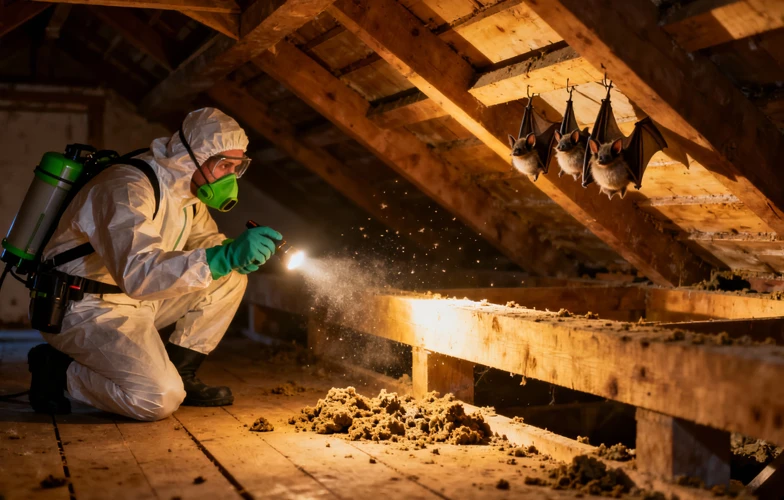
Once a bat infestation is established, natural scent deterrents alone won’t get rid of the colony. At this stage you need a structured, legal bat exclusion method rather than any DIY roost destruction. The aim is simple: get bats out of the attic and walls while allowing every animal to escape safely. A wildlife professional from EcoCare will survey your home, trace all entry points and mark the main roosts. One-way bat excluder devices, such as bat cones or bat valves, are then fitted over these openings. Bats can exit at dusk but cannot get back inside. When the colony has fully left, technicians clean thoroughly, remove soiled insulation and handle guano with appropriate protective equipment to reduce histoplasmosis risk. Finally, they seal openings so bats do not return to the same attic or roof void.

Integrated Pest Management: Combining Techniques
Lasting bat control means combining several methods rather than relying on a single quick fix. EcoCare’s integrated pest management approach is designed to get rid of bats and keep them out of your attic, loft and wall cavities for good. First, every roost, flight route and entry point is mapped so the team understands how bats move inside and outside the house. Next, natural deterrents, bright lights and ultrasonic repellents are used alongside carefully timed bat exclusion, using excluder tubes, cones and valves fitted by a BPCA-certified wildlife professional. Once the colony has left, EcoCare focuses on hygiene and proofing: guano removal, disinfection and sealing cracks to prevent new entry points forming. Throughout, the company works within wildlife law, protecting a vulnerable species while helping you get rid of a stressful bat problem in your home.

Unique Tips & Homeowner Insights
Homeowners often want to get rid of bats without feeling guilty about harming wildlife. A few habits make that easier. Inspect the attic and roof edges at least twice a year so you catch the first signs of a bat infestation, rather than waiting until a maternity colony is active. Keep outdoor lighting modest so you don’t attract extra insect food sources right beside the house. Reduce standing water in the garden to lower mosquito numbers and make nearby areas less attractive to feeding bats. Inside, keep stored fabrics, boxes and insulation organised so they don’t become unnoticed roosting spots behind clutter. Keep a simple log of noises, droppings and times you see bats leaving the building; this record helps a wildlife professional quickly pinpoint each entry point and choose the safest way to get rid of bats from your property.
Quick Takeaways
Get rid of bats humanely by pairing natural deterrents with a professional bat exclusion method.
Check the attic, eaves and roofline for entry points, stains and bat droppings on a regular basis.
Use bright lights, herbs, cedar and ultrasonic devices to make bat-infested areas less appealing.
Clean thoroughly after bat removal and manage bat guano carefully to lower histoplasmosis risk.
Contact EcoCare for BPCA-certified, eco-friendly bat control across London and Surrey.

Long-Term Bat Control & Prevention
To completely get rid of bats, you need more than a single weekend of DIY activity in the attic. Consistency and a clear plan make the difference between another colony moving in and long-term peace of mind. By combining natural deterrents, timed bat exclusion and professional cleaning, you reduce histoplasmosis risk from droppings, protect your attic structure and respect the fact that bats are a protected species. EcoCare’s “Call – Clean – Clear” model means one team manages every step: inspection, exclusion devices, guano removal and sealing any remaining entry points. Their technicians understand how bats behave inside real London and Surrey homes, barns and commercial buildings. With routine checks of bat-prone areas and support from a qualified wildlife professional, you can get rid of bats for good while still supporting a healthy urban ecosystem around your home.
Frequently Asked Questions